

Let’s Compare Expository Text 1 & 2, Kunci Jawaban Bahasa Inggris Kelas 10 SMA Kurikulum Merdeka Hlm. 114
inNalar.com – Siswa kelas 10 SMA dapat mempelajari kunci jawaban Bahasa Inggris Kurikulum Merdeka pada artikel ini.
Dalam artikel ini, kita akan bersama-sama menganalisis latihan soal yang ada di Chapter 5 ‘Graffiti’ Task 3 halaman 114.
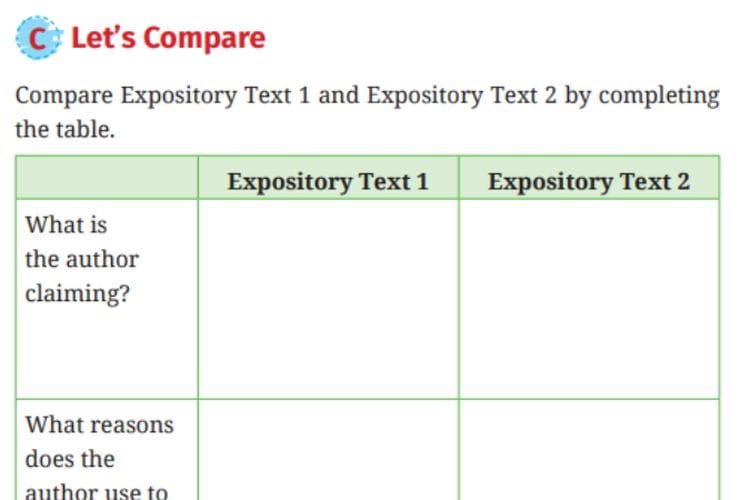
Pada halaman tersebut, terdapat subbab C. Let’s Compare yang dari instruksi itu siswa diminta untuk compare atau membandingkan expository text 1 dan expository text 2.
Cara mengerjakannya adalah dengan menjawab setiap pertanyaan yang ada di tabel hijau.

Jawaban dari setiap pertanyaan tersebut sebenarnya cukup relatif, sehingga teman-teman dapat mengembangkan kalimat dari kunci jawaban berikut.
Ini dia kunci jawaban latihan soal Bahasa Inggris kelas 10 SMA: Let’s Compare Expository Text 1 & 2
1. What is the Author claiming?
Expository Text 1:
The Author claims that graffiti should be considered art because…

– it allows artists to express themselves,
– it emotionally connects them with the public, and
– it is a unique form of expression that enriches society.
Expository Text 2:

The Author claims that graffiti is mentioned as vandalism because…
– it is done without permission and damages property, regardless of how artistic it may appear.
2. What reasons does the Author use to support the claim?
Expository Text 1:
Baca Juga: Membuat Pengumuman, Kunci Jawaban Bahasa Indonesia Kelas 5 SD Kurikulum Merdeka Hlm. 143-144
– Graffiti allows the public to see something new and connects them to the artists.
– Graffiti can have a positive impact by giving artists a voice and allowing the public to appreciate their work.
– Graffiti is unique and serves as a form of expression, allowing for diversity in the art form.
Expository Text 2:
– Graffiti is always vandalism because it is commited without consent and is considered as a crime.
– Celebrating graffiti on someone else’s property but not on one’s own shows its destructive nature.
– Graffiti contributes to the breakdown of public order and encourages further crime.
3. What evidence does the Author include?
Expository Text 1:

– Graffiti turns a simple building or surface into a masterpiece, which helps artists connect with their audience.
– Graffiti’s uniqueness is highlighted by the fact that each piece is different, and it provides something new for the viewer.
– The positive impact of graffiti can be seen when people admire the artwork and discuss it.
Expository Text 2:
Baca Juga: Kurikulum AI dan Coding Mulai Berlaku Semester Depan? Mendikdasmen Abdul Mu’ti Beri Penjelasannya

– The question of when graffiti becomes art is dismissed, claiming it is always vandalism.
– Graffiti’s negative impact on property is illustrated by the question of whether one would appreciate it if their own property were tagged.
– The reference to Mayor John Lindsay’s stance on graffiti and the “Broken Windows Theory” provides evidence of its harmful societal impact.
4. What does the Author say as the closing?
Baca Juga: Kenali 3 Jalur Masuk Pendaftaran, Begini Cara Mendaftar di PKN STAN Tahun 2025

Expository Text 1:
The Author suggests that understanding the origins and evolution of graffiti can lead to greater appreciation and positivity in society.
Expository Text 2:
The Author concludes by emphasizing that graffiti shouldn’t be celebrated, as it leads to disorder and shows that an area is dominated by vandals.***
